Ruling Russia by Zimmerman William
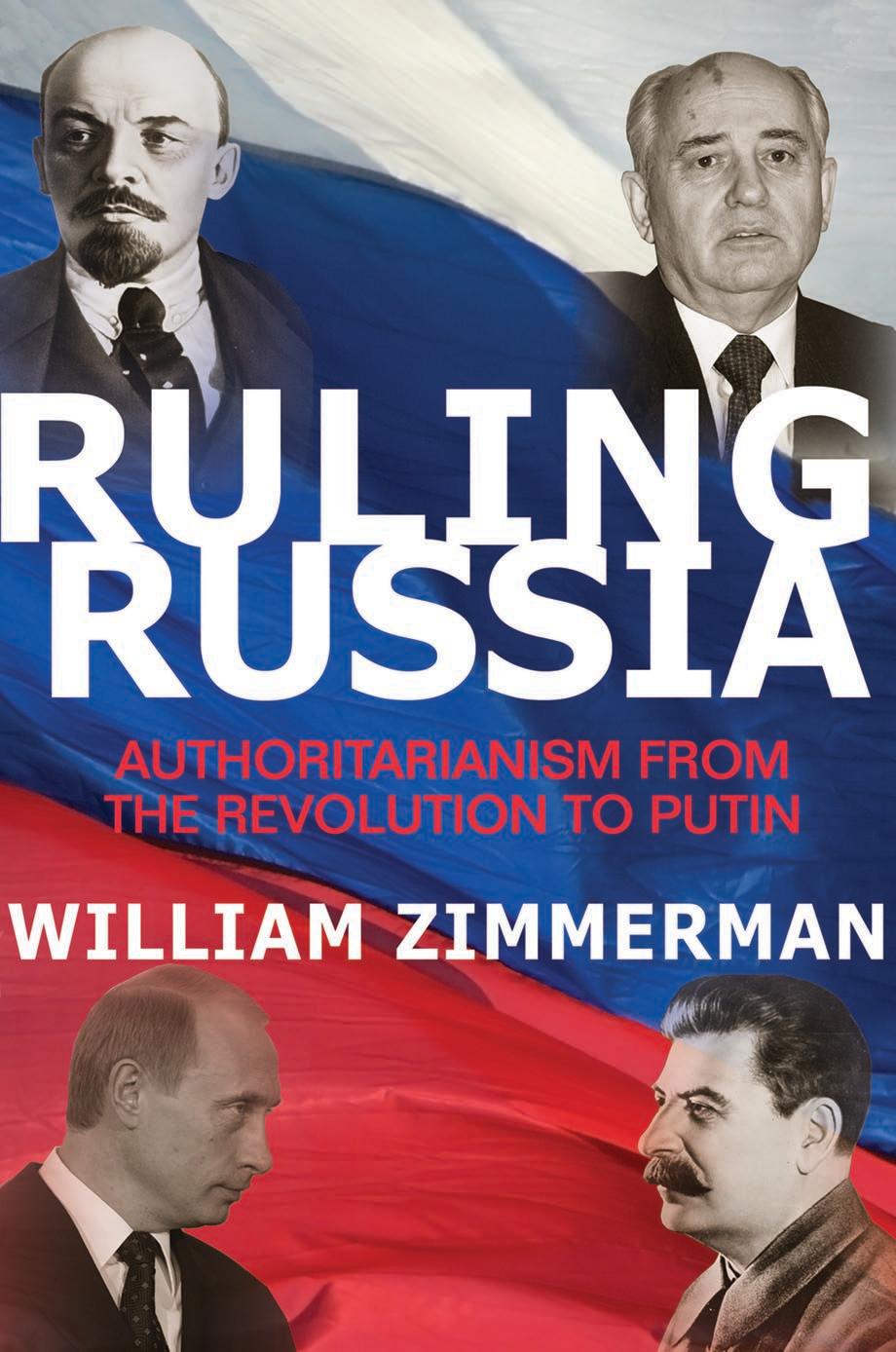
Author:Zimmerman, William
Language: eng
Format: epub, pdf
Publisher: Princeton University Press
Published: 2014-05-29T16:00:00+00:00
CHAPTER 6
Uncertainty and “Democratization”
THE EVOLUTION OF POST-BREZHNEVIAN POLITICS, 1982–1991
THE PREVIOUS CHAPTER ARGUED that during Khrushchev’s and Brezhnev’s tenures in office a slow evolution of norms had occurred at the level of high politics. These norms constrained the actions of both the general secretary and the remaining members of the Politburo. More than anything else, the implicit concordat among them was grounded in a mutual understanding that failed political opposition would not result in death to the loser. But in Brezhnev’s case, the circumstances under which he replaced Nikita Khrushchev constrained his behavior as well.
Brezhnev died in 1982. I am tempted to treat Yury Andropov and Konstantin Chernenko as the answers to a trivia question. (Who were the Soviet general secretaries in the interim between Brezhnev’s death and Mikhail Gorbachev’s selection as general secretary in March 1985?) But Martin Malia1 was correct to observe that Brezhnev’s last years and the interregnum following his death and preceding the Gorbachev appointment are important in understanding the high politics that resulted in the latter’s selection as general secretary. In part, the impact these years had was simply a matter of natural attrition. Key figures died who had been major players in Soviet politics for decades. (The most important of these were Kosygin, who died in 1980; the long time Party ideologist Mikhail Suslov, who died, as did Brezhnev, in 1982; and Dmitry Ustinov, the minister of defense and Politburo member, who died in December 1984.) But Andropov also took an active role in providing a milieu in which Gorbachev could emerge as the consensus choice as general secretary. In a move that much diminished the prospects that the head of the Moscow Party organization, Viktor Grishin, would become general secretary, Andropov campaigned vigorously against corruption. Moreover, he also cultivated the minds of some smart Soviet intellectuals and encouraged them to assess the implications of the palpable Soviet malaise. The most well known of these efforts was Tatyana Zaslavskaya’s Novosibirsk Report, written in 1983 and leaked to the West in 1984. It was a thoroughgoing critique of the failures of central planning and a vivid depiction of working-class dissatisfaction. (“They pretend to pay us and we pretend to work.”) But Andropov reached out to others as well.2 Moreover, he made a point of familiarizing Gorbachev (a full member of the Politburo in 1980) with the intellectuals he, Andropov, “had gathered around himself throughout his career”3 and took other steps (described in many accounts4) to position Gorbachev in such a way in the near future that he could emerge as someone around whom a majority of the Politburo could coalesce.
Equally important, Andropov abandoned Brezhnev’s “trust in cadres” policy. Only 5 of the, at that juncture, 156 oblast first secretaries were replaced in the meta-stable five-year period 1976–81. Andropov appointed Yegor Ligachev to oversee cadre appointments. During the former’s brief tenure as general secretary, 33 regional first secretaries were replaced.5 Given Ligachev’s “puritan”6 disposition, this doubtless meshed well with Andropov’s anticorruption policies. But it also likely increased
Download
This site does not store any files on its server. We only index and link to content provided by other sites. Please contact the content providers to delete copyright contents if any and email us, we'll remove relevant links or contents immediately.
| Arms Control | Diplomacy |
| Security | Trades & Tariffs |
| Treaties | African |
| Asian | Australian & Oceanian |
| Canadian | Caribbean & Latin American |
| European | Middle Eastern |
| Russian & Former Soviet Union |
The Secret History by Donna Tartt(19028)
The Social Justice Warrior Handbook by Lisa De Pasquale(12182)
Thirteen Reasons Why by Jay Asher(8883)
This Is How You Lose Her by Junot Diaz(6872)
Weapons of Math Destruction by Cathy O'Neil(6261)
Zero to One by Peter Thiel(5782)
Beartown by Fredrik Backman(5734)
The Myth of the Strong Leader by Archie Brown(5491)
The Fire Next Time by James Baldwin(5423)
How Democracies Die by Steven Levitsky & Daniel Ziblatt(5211)
Promise Me, Dad by Joe Biden(5139)
Stone's Rules by Roger Stone(5078)
A Higher Loyalty: Truth, Lies, and Leadership by James Comey(4946)
100 Deadly Skills by Clint Emerson(4911)
Rise and Kill First by Ronen Bergman(4775)
Secrecy World by Jake Bernstein(4738)
The David Icke Guide to the Global Conspiracy (and how to end it) by David Icke(4696)
The Farm by Tom Rob Smith(4500)
The Doomsday Machine by Daniel Ellsberg(4481)
